

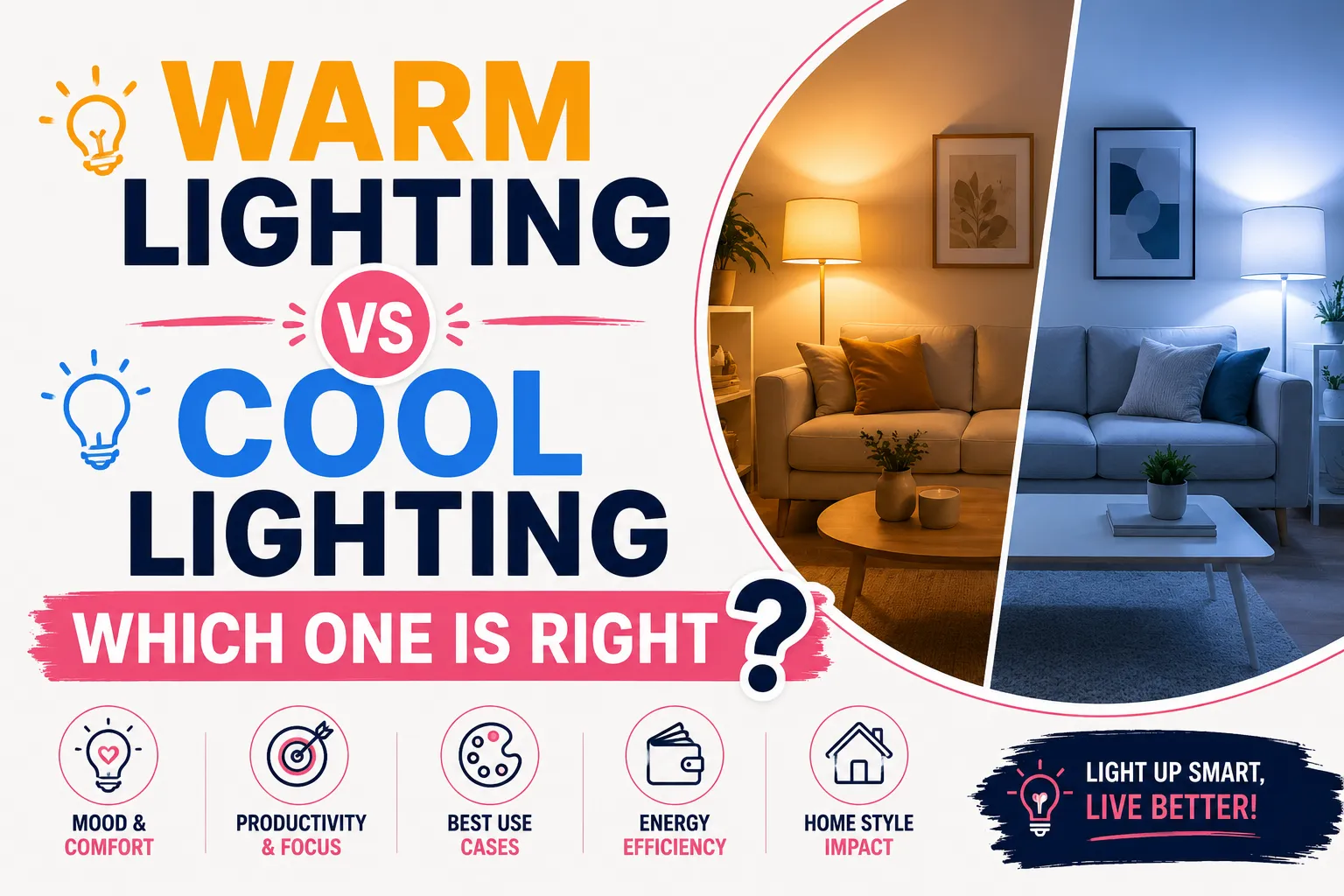
Pick the wrong lighting color temperature and every photo from your event will tell.
Guests will look washed out or sickly. Tablescapes that looked stunning in the showroom will appear flat under the wrong light. The mood you spent weeks designing will feel off – and most guests won’t know why.
This guide explains the difference between warm and cool lighting clearly, tells you exactly when to use each, and gives you the event-specific verdict that office lighting companies like Wipro simply cannot provide.
Color temperature is measured in Kelvin (K). The lower the number, the warmer and more golden the light. The higher the number, the cooler and more blue-white the light.
Color Temperature | Appearance | Common Name |
2700K | Deep amber-gold | Warm white / candlelight |
3000K | Soft golden-white | Warm white |
3500K | Neutral white | Natural white |
4000K | Crisp, clean white | Cool white |
5000K–6500K | Blue-white / daylight | Cool / daylight |
According to the Illuminating Engineering Society (IES), color temperature is one of the most significant factors in how humans perceive and respond to a lit environment – affecting comfort, alertness, and emotional state.

Warm lighting (2700K–3000K) creates a golden, amber glow.
It mimics the quality of candlelight and late-afternoon sunshine – which is why it feels natural, intimate, and comfortable.
Warm lighting:
Best for: Weddings, quinceañeras, romantic dinners, bridal and baby showers, anniversary celebrations, garden parties, and any event where a romantic or intimate atmosphere is the goal.

Cool lighting (4000K–6500K) creates a bright, blue-white or crisp white glow.
It mimics daylight and office fluorescent lighting – which is why it feels productive, modern, and energizing, but can also feel harsh in celebratory settings.
Cool lighting:
Best for: Corporate presentations and conferences, modern product launches, industrial or commercial spaces, retail displays, and high-energy events where an energizing, nightclub-style atmosphere is desired.
This is the angle that Wipro’s blog misses entirely – and it is the most important consideration for anyone planning an event.
Camera sensors and the human eye both respond to color temperature. Under warm lighting (2700K–3000K), skin tones appear healthy, golden, and flattering. Colors in photos appear rich and saturated. The overall image quality has the cinematic warmth that makes event photography look professional.
Under cool or bluish lighting (5000K+), skin tones can appear pale, flat, or slightly grey. Backgrounds can feel clinical. Photos taken under harsh cool light often require significant post-processing to look good – and even then, they rarely match the natural beauty of a warmly lit event.
According to research from the American Psychological Association, warm light environments are associated with greater emotional warmth, social connection, and positive mood in social settings – all of which directly affect the guest experience at an event.
For events where professional photography and social media content matter – weddings, quinceañeras, luxury birthdays, corporate galas – warm lighting is not a stylistic preference, it is a practical requirement.
Scenario | Best Choice | Why |
Wedding ceremony | Warm (2700–3000K) | Romantic, flattering for portraits |
Wedding reception dancing | Warm + color uplighting | Energy with warmth at base |
Quinceañera reception | Warm base + color accents | Flatters gowns, skin tones |
Corporate conference | Cool (4000K) | Alert, professional, task-focused |
Product launch or gala | Warm + branded color accents | Sophisticated, photographable |
Outdoor tent daytime | Warm or neutral (3000–3500K) | Complements South FL natural light |
Nightclub-style dance event | Cool + moving heads | Energy, drama, modern feel |
Garden party brunch | Warm (3000K) | Natural, comfortable, outdoor-aligned |
Holiday dinner | Warm (2700K) | Intimate, traditional, cozy |
Warm vs cool lighting decisions are affected by South Florida’s specific outdoor light environment – and this is where national lighting guides fall short.
During daylight hours, South Florida’s tropical sun produces intensely bright natural light with a color temperature of approximately 5500K–6500K. This means outdoor events during afternoon hours are bathed in cool-toned natural light regardless of your artificial lighting choice.
For daytime outdoor events (ceremonies, garden parties, afternoon bridal showers): natural light does the heavy lifting. Focus on shade and diffusion – tent ceiling draping that softens harsh direct sun into a warm, even glow is more impactful than artificial light during these hours.
As the sun sets and natural light fades below 5000K, warm artificial lighting becomes the primary design element. This transition – from cool natural light to warm artificial glow – is one of the most beautiful lighting moments at any South Florida outdoor event, and planning for it intentionally produces spectacular photography.
Our wireless LED uplights calibrated to warm amber, combined with outdoor string lights in warm white, create this sunset-to-evening lighting transition beautifully across Miami and Broward County events.
For complete tent lighting strategy, our tent lighting ideas guide covers the full layering approach for outdoor events.
Yes – and the best events often do.
The professional approach for most events:
This layered combination gives you the romance and photography quality of warm light throughout the event, with enough visual dynamism to keep energy high on the dance floor.
Choose warm lighting (2700–3000K) for: weddings, quinceañeras, birthday celebrations, garden parties, anniversary dinners, romantic events, and any event where photography quality and guest comfort are priorities.
Choose cool lighting (4000–5000K) for: corporate conferences, modern product launches, high-energy dance events where an urban/nightclub aesthetic is intentional, and functional service areas regardless of event type.
When unsure: warm. The vast majority of events – and especially South Florida’s Latin, Caribbean, and multicultural celebration culture – are best served by warm lighting as the baseline.
We provide professional warm-toned event lighting packages across Miami-Dade and Broward County – warm white LED string lights, wireless LED uplights in every color, chandeliers, candle holders, and flameless LED candles – all coordinated to create the right lighting environment for your specific event.
Contact our team to plan your event lighting, or explore our full catalog at mydecorevents.com.
What is the difference between warm and cool lighting?
Warm lighting falls in the 2700K–3000K range on the Kelvin scale and produces a golden, amber glow – similar to candlelight or late-afternoon sun. Cool lighting falls in the 4000K–6500K range and produces a bright, blue-white or crisp white tone similar to daylight or office fluorescent lighting. The key difference is the color and mood each creates: warm feels intimate and romantic, cool feels energizing and clinical.
What color temperature is best for wedding lighting?
2700K to 3000K is the industry standard for wedding lighting. This range produces the warm, flattering glow that makes skin tones look radiant in photographs, complements gold and floral décor beautifully, and creates the romantic atmosphere most couples are looking for. According to the Illuminating Engineering Society, this range is also associated with the highest levels of perceived comfort in social environments.
Does warm lighting look yellow and unflattering?
No – quality warm white LED lighting at 2700K–3000K does not produce an unflattering yellow cast. The confusion comes from very low Kelvin bulbs (below 2400K) or poor-quality warm white LEDs that lack good color rendering. Professional-grade warm white LEDs produce a golden glow that flatters skin tones and enhances color without creating an orange or yellow cast.
Is cool lighting bad for events?
Not inherently – but it is the wrong choice for most celebration events. Cool lighting above 4000K can make skin tones appear pale or flat in photos, reduce the perceived warmth of gold and earth-tone décor, and create a clinical atmosphere that works against the romantic or celebratory mood most events aim for. For corporate events with a specific modern aesthetic, cool lighting can work well.
What is the best lighting for outdoor events in Miami?
Warm white lighting (2700–3000K) works best as the ambient base for outdoor events in Miami and Broward County, particularly as natural light fades in the evening. During daylight hours, tent ceiling draping that softens the sun’s natural light is more effective than artificial lighting. As sunset approaches, warm string lights, LED uplighting, and candle clusters work in combination to create a cinematic, photogenic environment that takes advantage of South Florida’s spectacular golden hour.
Related Reading:


