

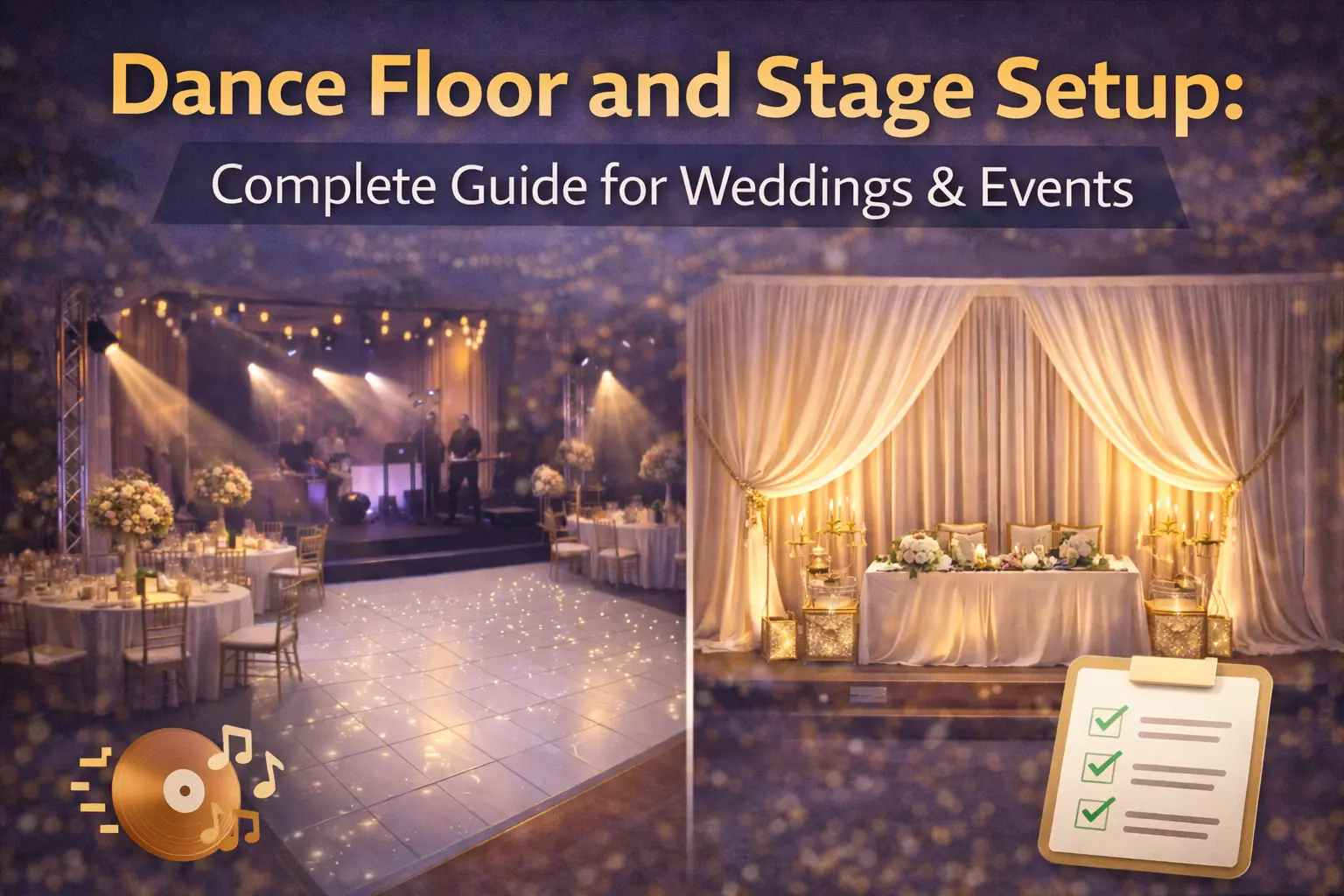
A well-designed dance floor and stage can transform an ordinary venue into a vibrant event space. These two elements work together to create the central energy of weddings, receptions, concerts, corporate events, and private parties.
The stage becomes the focal point where speeches, performances, or DJs take control of the atmosphere. The dance floor becomes the interactive space where guests celebrate, move, and engage with the event. When planned correctly, they create a natural flow in the venue that keeps guests entertained throughout the night.
Many event planners focus heavily on décor while overlooking how critical the layout of the stage and dance floor actually is. In reality, these elements shape the guest experience more than almost anything else.
A dance floor is a designated surface installed specifically for dancing during an event. It can be placed indoors or outdoors and is typically made from modular panels that lock together to form a smooth and stable area.
A stage is an elevated platform designed to highlight important moments. DJs, bands, speakers, and performers usually stand on the stage so they remain visible to the entire audience.
Together, the stage and dance floor form the entertainment hub of an event. The stage delivers the performance, and the dance floor allows guests to participate.
Every event needs a central activity zone. Without a defined dance area, guests tend to scatter throughout the venue. A designated dance floor naturally gathers people together and encourages interaction.
A stage also ensures visibility. Guests seated farther away can still see speeches, performances, or announcements clearly.
Beyond function, the dance floor and stage also influence the overall aesthetic of the venue. When paired with lighting, draping, and décor, they create a professional and polished environment.
Dance floors and stages are essential for a wide variety of events. Weddings are the most common example because they include formal dances, DJ performances, and speeches throughout the evening. Corporate events often use stages for presentations, awards ceremonies, and entertainment.
Birthday parties, engagement celebrations, and quinceañeras also rely on dance floors as the center of the celebration. Concerts and community festivals require larger stages and performance areas.
Even small gatherings benefit from a defined dance space because it organizes the venue and encourages guests to participate in the celebration.
Dance floor size depends mainly on guest count and venue space. A good rule of thumb is that roughly 30–50% of guests will be dancing at any given time during an event.
If the dance floor is too small, guests feel crowded and uncomfortable. If it is too large, the energy becomes diluted because the space feels empty.
Common dance floor sizes include smaller installations for intimate gatherings as well as larger setups for weddings with hundreds of guests. Outdoor events often require slightly larger floors to ensure stability and visibility.
The key is to match the dance floor dimensions with both the guest count and the overall venue layout.
Stage design must consider visibility and purpose. A DJ stage for a wedding may only require a modest elevation so the equipment and performer remain visible above the crowd.
Corporate presentations or live performances often require larger stages so multiple people can stand comfortably while remaining visible to the audience.
Stage height also affects photography and guest visibility. If the stage is too low, guests in the back cannot see clearly. If it is too high, it can feel disconnected from the crowd.
Balancing height and width ensures the stage feels integrated with the dance floor rather than separate from it.
Dance floors come in several materials and finishes. Wooden dance floors are among the most popular for weddings because they provide a classic and elegant look. White dance floors create a modern aesthetic and reflect lighting beautifully, making them ideal for upscale receptions.
LED dance floors are increasingly popular for modern parties and nightclub-style events. These floors include built-in lighting panels that change color and pattern throughout the evening.
Outdoor dance floors often require weather-resistant materials and additional support structures to ensure stability on grass or uneven surfaces.
Lighting plays a huge role in creating atmosphere around the dance floor and stage. Soft ambient lighting can highlight the stage during speeches or performances, while dynamic party lighting energizes the dance floor later in the evening.
Uplighting around the edges of the dance floor creates a glowing effect that draws guests toward the center of the room. Spotlights can focus attention on performers or the couple during special dances.
Professional lighting setups can shift colors and intensity throughout the event, transitioning smoothly from dinner to dancing.
The placement of the stage and dance floor determines how guests move through the venue. Ideally, the dance floor should be centrally located so it becomes the natural gathering point for the event.
The stage is typically positioned at one end of the dance floor so the DJ or performers face the audience. This arrangement keeps energy directed toward the center while maintaining clear sightlines.
Tables should be placed close enough for guests to feel connected to the action but far enough to allow comfortable movement and dancing.
Good layout design prevents congestion and keeps the flow of the event smooth.
Safety is critical when installing dance floors and stages. Professional equipment includes non-slip surfaces and secure locking panels to prevent shifting during use.
Stages must be weight-tested to support performers, equipment, and multiple people standing together. Outdoor installations often require additional stabilization to prevent movement on uneven ground.
Working with experienced rental providers ensures all equipment is installed correctly and meets safety standards.
For most events, renting is the practical option. Purchasing equipment requires storage, transportation, and setup expertise that most hosts do not have.
Rental services provide delivery, installation, and removal after the event. This allows planners to focus on the celebration rather than logistics.
Professional rentals also offer a wider range of sizes and styles so you can match the setup perfectly to your event.
If you are planning a wedding, corporate event, or celebration and need professional setup, you can explore available event décor and rental services.
For custom event planning, layout advice, or booking information, you can contact the team directly through the contact page.
Many hosts underestimate how important dance floor placement and size are. Two common mistakes often reduce the energy of an event:
Planning these elements early ensures the entertainment area becomes the heart of the event.
A thoughtfully designed dance floor and stage can completely change the atmosphere of an event. These elements create the focal point where guests gather, celebrate, and create memories.
When the stage, dance floor, lighting, and layout work together, the energy of the room becomes contagious. Guests feel drawn to the celebration, and the event naturally flows from speeches to music to dancing.
In the end, the dance floor isn’t just a surface — it’s where the most memorable moments of the night happen.
The size depends on guest count, but a floor large enough for about one-third of guests to dance comfortably is usually recommended.
Yes. Outdoor dance floors are commonly installed on grass, patios, or tents with proper support and leveling.
A stage is not always required, but it helps elevate the DJ or performers so guests can see them clearly.
Wooden and white vinyl dance floors are the most popular because they complement most wedding décor styles.
Booking several months in advance is recommended, especially during peak wedding season.




Transform your event with elegant, custom décor designed to match your vision. Contact us today to discuss your event and secure your date.