Your table layout determines:
- Guest comfort
- Traffic flow
- Dance floor space
- Buffet efficiency
- Tent size
- Overall aesthetic
The wrong layout makes even a beautiful wedding feel crowded.
The right layout makes the same space feel intentional and elegant.
Let’s design it properly.
Step 1: Choose the Right Table Shape
Most wedding receptions use one of three core layouts:
Round Table Layout (Most Popular)
The industry standard for formal weddings.
Most commonly rented:
Why Round Tables Work:
- Encourage conversation
- Balance large spaces visually
- Easy to space evenly
- Ideal for tented weddings
Round tables are especially effective inside tented receptions. If you’re planning an outdoor wedding, see our guide on how to decorate a tent for a wedding to coordinate layout with tent structure.
Rectangular Table Layout (Modern / Family Style)
Common rental option:
Seats 6–8 guests.
Best For:
- Long banquet-style weddings
- Rustic themes
- Outdoor garden receptions
- Narrow venues
Rectangular tables maximize space efficiency but reduce circular conversation flow.
Mixed Layout (Luxury & Custom)
Combines:
- Round guest tables
- Rectangular head tables
- Sweetheart tables
- Buffet tables
This layout creates visual depth and zoning inside large tents or ballrooms.
How Many Tables Do You Need?
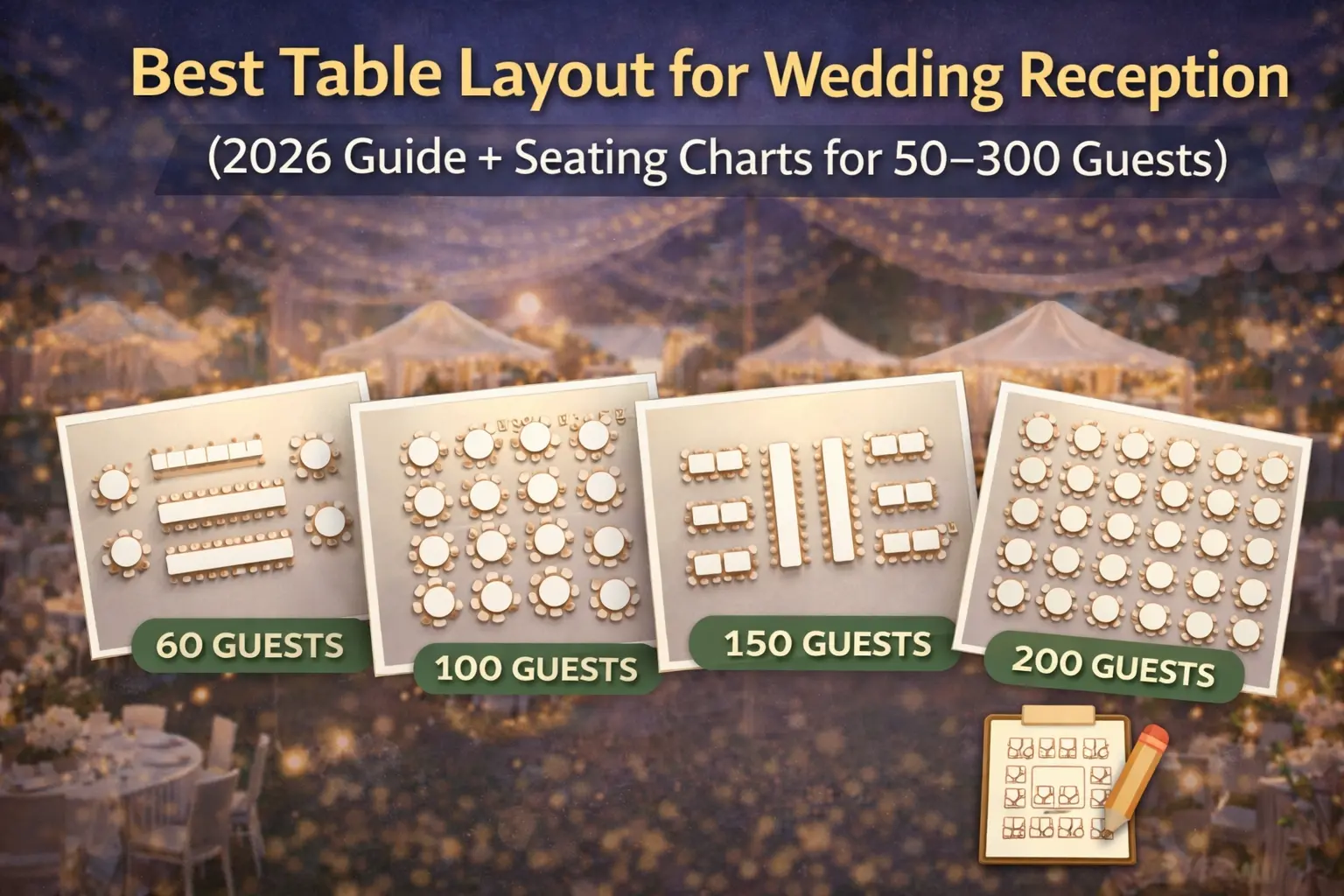
Here’s a quick seating reference using 60” round tables:
Guest Count | Tables Needed (8 per table) |
50 Guests | 7 Tables |
100 Guests | 13 Tables |
150 Guests | 19 Tables |
200 Guests | 25 Tables |
300 Guests | 38 Tables |
Spacing between tables should be at least 5 feet for comfortable guest movement.
Layout Types Based on Reception Style
Traditional Dance-Focused Layout
- Dance floor centered
- Guest tables surrounding dance floor
- Head table near focal wall
- Buffet along perimeter
Pair this with:
For focal impact, consider backdrop styling using ideas from DIY wedding backdrop ideas.
Buffet-Centered Layout
When serving buffet-style, traffic flow matters.
Recommended setup:
- Buffet tables against tent wall
- 2 serving lines (for 150+ guests)
- Clear 6–8 ft aisle spacing
Buffet layouts require catering structure.
If planning self-service dining, review catering equipment rental in Miami for chafer count planning and buffet spacing logic.
Intimate Wedding Layout (Under 75 Guests)
For smaller weddings:
- U-shape table configuration
- Single long banquet table
- Mixed lounge + dining
This reduces rental footprint and tent size requirements.
Tent Size & Table Layout Relationship
Table layout determines tent dimensions.
Example:
100 guests using 60” round tables
- Dance floor
- Buffet area
- DJ booth
You’ll typically need a 30×40 or larger tent.
For pricing impact, read
👉 Wedding Tent Cost in Miami
Poor layout planning often leads to oversizing the tent — increasing cost unnecessarily.
Spacing Guidelines for Comfort
Minimum spacing rules:
- 5 ft between round tables
- 12×12 ft dance floor minimum for 100 guests
- 6–8 ft clearance for buffet lines
- 4 ft behind chairs for server access
Ignoring spacing leads to congestion.
Head Table vs Sweetheart Table
Head Table:
Seats bridal party together.
Requires 6–12 ft rectangular table.
Sweetheart Table:
Small 2-person table centered at front.
If using a focal backdrop, coordinate wedding stage design to align photography angles and guest sightlines.
Common Wedding Layout Mistakes
- Oversizing the dance floor
- Underestimating buffet traffic
- Ignoring DJ equipment space
- Placing tables too close to tent walls
- Forgetting catering prep space
Professional layout planning reduces rental waste.
Example Layout Plans
100 Guest Reception Layout
- 13 Round Tables
- 1 Head Table
- 16×16 Dance Floor
- 2 Buffet Tables
- Beverage Station
- DJ Setup
Requires approx 30×40 tent minimum.
150 Guest Reception Layout
- 19 Round Tables
- Sweetheart Table
- 18×18 Dance Floor
- 3 Buffet Stations
- Beverage Station
- Photo Backdrop Area
Tent size: 30×60 or larger.
How to Choose the Best Table Layout
Ask:
- Is dancing the main focus?
- Is buffet or plated service?
- Is this indoor or tented?
- Is space rectangular or square?
- Do you want tight or spacious seating?
Your layout should serve the experience — not just fill space.
Final Thoughts: The Best Layout Is Intentional
There isn’t one universal “best” layout.
The best table layout for a wedding reception depends on:
- Guest count
- Tent size
- Service style
- Dance floor size
- Overall theme
But most Miami weddings benefit from round tables arranged around a centered dance floor with buffet along the perimeter.
Plan layout before locking in tent size, table count, or catering quantities. Structure first — styling second.
FAQs
What is the best table shape for a wedding reception?
60” round tables are the most versatile and conversation-friendly option.
How much space do I need between wedding tables?
At least 5 feet between round tables for comfortable movement.
How many tables do I need for 150 guests?
Approximately 19 round tables seating 8 guests each.
Should the dance floor be in the center?
In most layouts, yes. It creates symmetry and improves guest engagement.
How do I plan table layout inside a wedding tent?
Start with guest count → determine table count → add dance floor → add buffet → calculate tent size.